

Asset-backed securities (ABS) are a type of bond, typically issued by banks or other lenders.
What makes ABS different to conventional bonds, such as government or corporate bonds, is that they are ‘secured’ against a diversified pool of loans with similar characteristics.
This collateral pool will typically contain thousands of assets such as mortgage loans, and the interest and repayments on those assets are directed straight to investors in the bonds.
This is where the phrase ‘securitisation’ comes from – investors’ coupons are secured by the cash flowing from the regular repayments on the loans included in the pool. In other words, the credit risk in ABS transactions is limited to the quality of the assets.
[Table to be placed here]
At first glance, the ABS market can look like a confusing alphabet soup of acronyms (RMBS, CMBS, Auto ABS) but they simply identify the assets backing the bonds – for example residential mortgages (RMBS), commercial mortgages (CMBS), car loans (Auto ABS).
Why do firms issue ABS?
ABS is one way banks and other lenders fund their businesses. Their motivation for doing so is no different to that of any government or company issuing a regular bond – to borrow money against future revenues.
The difference with ABS is that it funds a specific pool of assets, and is backed by the proceeds from those assets, instead of the general financial strength of the issuing company.
For the issuer, one big advantage of ABS is that it offers ‘matched funding’ or ‘term funding’ – instead of selling normal corporate bonds to investors and then distributing the funds around the business, ABS funds a specific part of the balance sheet for a specific period of time.
For the ABS investor, the advantage is you are effectively being paid by the pool of loans backing the bond, rather than the company you are buying the bond from. If the issuing company was to go bankrupt, your coupons would continue to be paid, since the underlying borrowers in the loan pool are still making their payments each month.
How does ABS actually work?
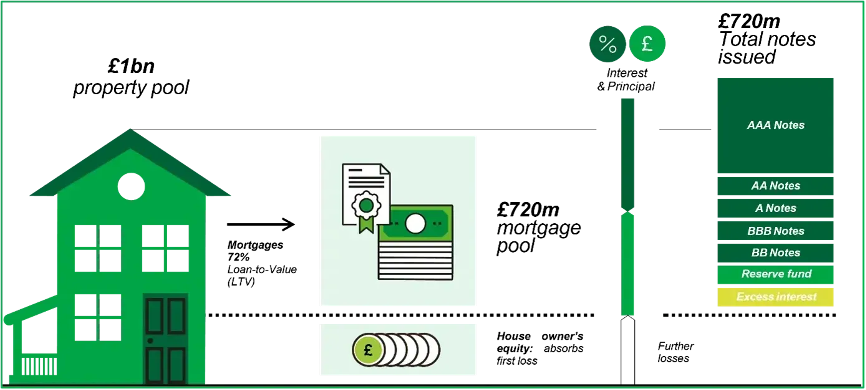
The bonds that are sold via ABS transactions are structured into different seniority layers, or “tranches”, which each carry a certain risk and return profile based on their position in the capital structure.
A sample RMBS structure
etc.